
Posted by: Brittany Doering
on September 25, 2026 | 5 min. read
on September 25, 2026 | 5 min. read
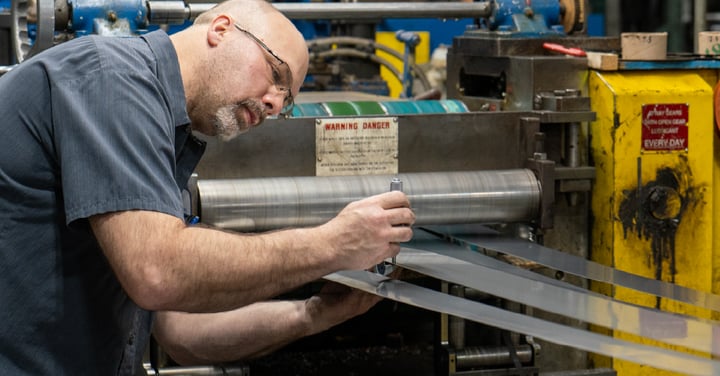

Toll processing means you supply the raw material (coil, sheet, or plate) and a metal service center performs the specific processing you need, using your metal instead of theirs. You keep ownership of the material the entire time; the processor supplies the equipment, the expertise, and the labor. If you've ever asked a supplier to slit, cut-to-length, or edge-condition metal you already own, you've used toll processing.
For procurement teams, toll processing is a way to control material sourcing and processing costs separately instead of accepting whatever a single vendor bundles together.
That distinction matters more than it sounds like it should. It changes who you can source from, what you pay for, and how much control you keep over the material going into your parts.
EXPLORE ALUMINUM PROCESSING SERVICES
This guide covers what toll processing actually involves, which processes are typically toll processed, why manufacturers choose it over buying pre-processed material, and what to ask a processor before you ship them anything.
A toll processor takes material you already own and runs it through a specific step in your supply chain, without ever taking ownership of it. You send the coil or sheet, they process it to your spec, and they ship it back or forward to your next destination.
This is different from a standard metal order, where the service center sources the raw material, processes it, and sells you the finished product as a single transaction.
With toll processing, sourcing and processing are two separate decisions. You might buy raw coil from one domestic mill for cost or traceability reasons, then send it to a metal service center purely for the value-added work.
The arrangement works because processing equipment (slitting lines, cut-to-length lines, edge conditioning lines) is expensive enough that most manufacturers don't run it in-house. Toll processing gives you access to that equipment without buying it.
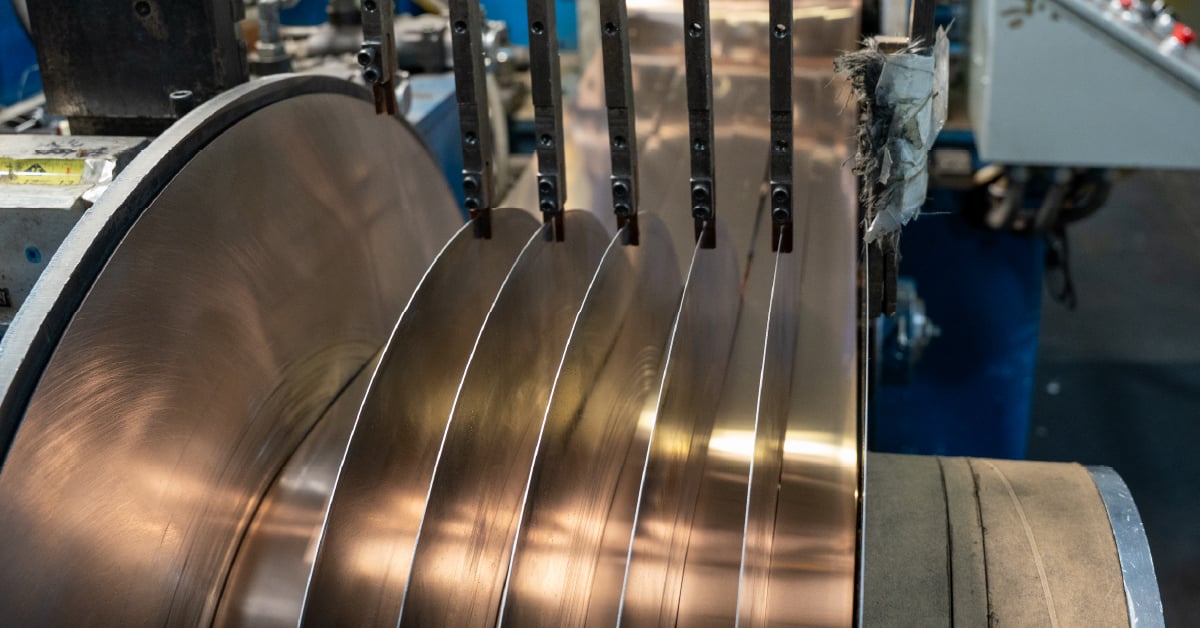
Most of the value-added services a metal service center offers can be run as toll processing, provided the volume and specs make sense for their equipment. At Mead Metals, that includes:
Not every processor runs every service, and not every service makes sense at every volume. A 200-pound order isn't worth setting up a slitting line for at some shops. Ask what minimums apply before you commit material.
Three reasons tend to come up most with procurement teams: cost control, traceability, and flexibility.
Cost control. When you source raw material separately from processing, you can shop each independently instead of paying whatever markup is baked into a bundled price. If you already have a strong relationship or a stockpile with a specific mill, toll processing lets you keep using it.
Traceability. Some industries, such as aerospace, medical, and defense, require documented chain of custody back to the original heat lot. Toll processing keeps that chain intact because the material never changes ownership; the paperwork follows the metal, not a sale.
Flexibility with minimums. A processor evaluating your job as a service, not a material sale, may have different minimum-order thresholds than they would for a standard order. That matters if you're running a smaller batch and don't want to buy in the processor's standard order quantities. Mead fills orders as small as 10 pounds without an inflated minimum-order penalty. It's worth asking about if a shop you're considering has stricter cutoffs.
A few questions upfront save you a bad surprise later:
If a processor can't answer these clearly, that's information too.
Download our full guide by clicking on this image below.

Yes. Mead performs slitting, cut-to-length, edge conditioning, and related processing on material customers supply, in addition to standard material orders.
Not inherently — it depends on your existing material sourcing. If you already have favorable pricing or a specific mill relationship for raw material, toll processing can cost less overall than a bundled order.
In a standard order, the service center sources, processes, and sells you the finished material as one transaction. In toll processing, you already own the material; the service center only performs the processing step.
Yes, at processors that don't apply large minimum-order penalties. Confirm minimums before shipping material, since they vary by shop and by process.

It typically improves it. Because ownership never changes hands, the material's chain of custody and heat-lot documentation stay tied to the original mill certification rather than being reissued at a sale.
If you're evaluating whether to source and process separately, the fastest way to find out is to send Mead your specs and current material details.

