

Posted by: Brian Rothstein
on August 16, 2024 | 5 min. read
on August 16, 2024 | 5 min. read
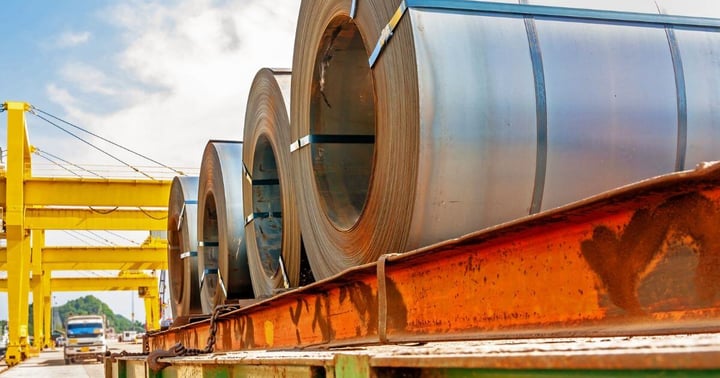

If a part fails in the field and you can't trace the metal back to its source, you have a problem that paperwork can't fix.
Traceability in manufacturing is the documentation that connects every piece of material to its origin — and it's one of the most important things to get right when qualifying a supplier.

When it comes to metal, material traceability is the ability to track a metal's full history through the supply chain — where it was melted, how it was processed, and every point it touched before it reached your floor. That chain of documentation gives you verifiable proof that the material you're using meets spec, and it gives you a defensible record when a customer or auditor asks for it.
In practice, full traceability relies on three types of documentation working together:
Mill test reports (MTRs) — also called mill certifications or material test reports — are certificates generated at the mill that confirm a metal's chemical composition and mechanical properties meet a stated standard, such as ASTM or AMS. Without an MTR, you have no verified proof that the material is what it claims to be. Every order from a quality supplier should include one.
Heat and lot numbers are unique identifiers assigned to a batch of metal during the melting or production process. A heat number traces back to a specific melt; a lot number tracks a batch through a distributor or processor's facility. Together, they let you isolate exactly which material is affected if a quality issue surfaces — and respond without guessing.
Chain-of-custody records document a material's movement and handling at every step, from the mill to the service center to your receiving dock. A clean chain of custody means no gaps in the trail, which matters when you're facing a customer audit or a non-conformance investigation.
For manufacturers in regulated industries, traceability isn't optional. It's written directly into the quality standards your customers hold you to.
AS9100 (aerospace) and ISO 9001 (general manufacturing) both require documented traceability processes. IATF 16949 requires it in automotive. DFARS-regulated defense suppliers must be able to confirm domestic material origin — which means your supplier's documentation has to hold up, not just yours.
When a defect surfaces, traceable records let you act fast: identify the affected heat lot, pull it from production, and notify downstream customers with specifics. Without traceability, a single quality event can turn into a full production halt while you try to figure out what you actually used.

One of the most practical reasons to source domestically is documentation reliability. U.S.-based metal service centers operate under consistent regulatory frameworks, which generally means tighter and more standardized traceability records — and a much shorter call when you need an MTR pulled from six months ago.
International sourcing introduces real variability. Certification standards differ by country, documentation formats aren't always compatible with U.S. customer requirements, and communication delays can make resolving a documentation gap slow and expensive. For manufacturers supplying aerospace, defense, or medical customers, that variability is a risk most programs can't absorb.
Working with a domestic ISO-certified supplier removes most of that friction. Certifications are verifiable, documentation standards are consistent, and when you need records fast, you're not waiting on a 12-hour time difference.
Related reading: The Pros and Cons of Domestic vs. Overseas Metal Sourcing

Mead Metals provides mill test reports with every order, maintains heat and lot tracking through all processing operations, and keeps documentation on file for fast retrieval.
A supplier who can't produce traceability documentation on request shouldn't make your approved vendor list. Here's how to qualify a metal supplier across certifications, lead times, capabilities, and communication.
Whether you're supplying an aerospace program or just want a supplier whose paperwork holds up under scrutiny, we make traceability simple.

A mill test report — also called a material test report or mill certification — is a document generated at the metal mill confirming that a batch of material meets its specified chemical and mechanical properties. It's the foundational document for material traceability and is required by most regulated manufacturing customers.
A heat number is assigned at the mill and identifies a specific melt of metal. A lot number is typically assigned by a distributor or processor to track a batch through their facility. Both are needed for full supply chain traceability.
Not universally, but it's required by contract or regulation in aerospace (AS9100), defense (DFARS), medical, and automotive (IATF 16949) manufacturing. For general industrial use, it's considered best practice — and it's a sign of a quality supplier regardless of application.
Yes — a quality service center tracks heat and lot numbers through every processing step, so material you receive after slitting, cutting, or leveling can still be tied back to the original mill cert.
Don't accept the material for a regulated application. Request the documentation before your order ships, and if a supplier can't produce it, that's a signal about their quality management practices overall.
