Posted by: Jim Wilber
on March 27, 2024 | 7 min. read
on March 27, 2024 | 7 min. read
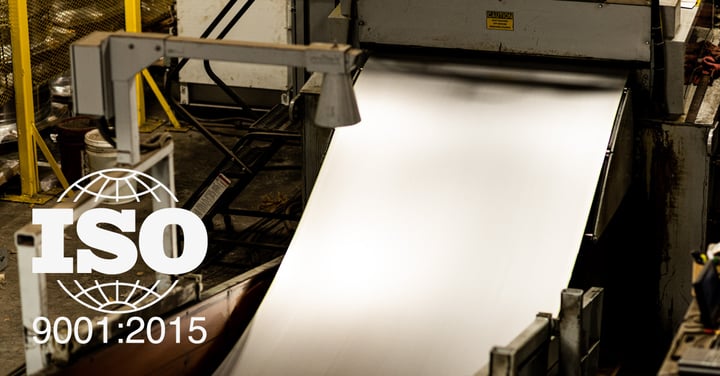
ISO certified means an accredited, independent certification body has audited a company and confirmed its management system meets an ISO standard. For manufacturers and their suppliers, that standard is usually ISO 9001, which covers quality management. The certificate covers how a company runs its processes. It does not certify individual products.
That distinction matters when you’re buying metal. A supplier’s ISO 9001 certificate tells you its processes are documented and checked by an outside auditor on a schedule. It doesn’t tell you whether a specific coil meets your spec. Here’s what the term covers, where it stops, and what changed with the 2026 edition of the standard.
That distinction matters when you’re buying metal. A supplier’s ISO 9001 certificate tells you its processes are documented and checked by an outside auditor on a schedule. It doesn’t tell you whether a specific coil meets your spec. Here’s what the term covers, where it stops, and what changed with the 2026 edition of the standard.
ISO is the short name for the International Organization for Standardization, an independent, non-governmental body based in Geneva that publishes international standards. It isn’t an acronym. The founders chose a name derived from the Greek word isos, meaning equal, so the short form would be the same in every language.
ISO writes the standards, but it doesn’t certify anyone. Independent certification bodies run the audits and issue the certificates. In the U.S., accreditation bodies such as ANAB confirm that those certification bodies are competent to do the work.
A certificate typically runs on a three-year cycle. The company passes a full certification audit up front, surveillance audits during the cycle, and a recertification audit to renew. A company that stops maintaining its system can lose the certificate.
AS9100 is the quality management standard for aviation, space, and defense. The current revision, AS9100D, is built on ISO 9001:2015 and contains all of its requirements. It then adds requirements those industries depend on, such as product safety, configuration management, and counterfeit part prevention. If your parts end up in aerospace or defense work, your customer may require AS9100 from every supplier in the chain.
ISO published the sixth edition, ISO 9001:2026, on Sept. 16, 2026. It keeps the structure of the 2015 edition and adds more weight on quality culture and leadership, a clearer split between risks and opportunities, and the climate change consideration added in 2024. Companies certified to ISO 9001:2015 have until Sept. 30, 2029, to transition, and their 2015 certificates stay valid until then.
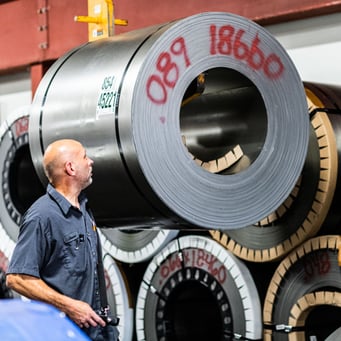
For a metal service center, ISO 9001 shows up in the day-to-day work you depend on. You should expect a certified supplier to:
Certification doesn’t guarantee every shipment is perfect. It means a system is in place to prevent problems and fix them when they happen. That’s why you still check certs on arrival and ask suppliers how they handle a miss. Certification is one of four areas worth vetting before you approve a vendor, and our guide on how to qualify a metal supplier covers all four.
Mead Metals is certified to AS9100D, the quality management standard for aviation, space, and defense. Because AS9100D includes every ISO 9001:2015 requirement, our quality system is audited against the full ISO 9001 framework plus the added aerospace requirements. Perry Johnson Registrars, an independent registrar, audits our system on a regular schedule.
That certification backs every order, whether it’s 10 pounds or 2,000. You can see the details on our certifications page.
At Mead Metals, we believe in exceeding expectations — both for ourselves and for our customers. That's why achieving and maintaining ISO certification is a cornerstone of our commitment to excellence. But what exactly does this mean for you?
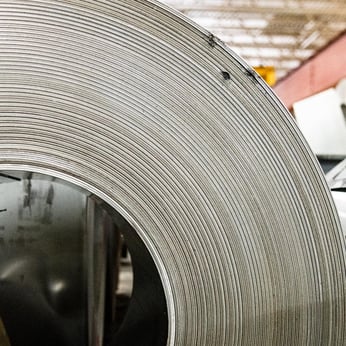
Our ISO-certified quality guarantees rigorous standards are applied at every stage, from sourcing materials to delivering finished products. This translates to consistent quality and reliability you can depend on.
Standardized processes across the company minimize errors and maximize production flow. This means faster turnaround times and a smoother overall experience for you.
Annual third-party audits ensure ongoing compliance and provide independent verification of our commitment to quality.
Continuous improvement is ingrained in our ISO-driven systems. We constantly adapt and evolve to meet the latest industry standards and exceed your evolving needs.
When you choose Mead Metals, you choose a partner dedicated to exceeding industry benchmarks. Our ISO certification is a tangible symbol of our unwavering commitment to quality and customer satisfaction.
Our adherence to international standards makes us a seamless partner for global projects. No matter where you are, you can expect the same consistent quality and service from Mead Metals.
ISO certification is more than just a badge of honor — it's a promise. It's a promise of quality, efficiency, and unwavering dedication to meeting your needs. At Mead Metals, we stand behind that promise every step of the way.
Certification is one of four categories to vet before approving a vendor. Our guide on how to qualify a metal supplier covers all four, plus a scorecard for comparing suppliers side by side.