Posted by: Brittany Doering
on June 29, 2026 | 8 min. read
on June 29, 2026 | 8 min. read
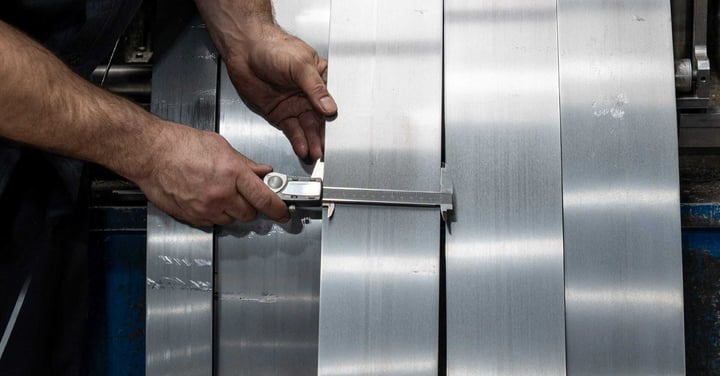
The part run fails. The shipment arrives out of tolerance. A customer calls with a rejection. By the time a quality problem is visible, the cost is already counting.
What makes metal supply quality problems particularly difficult is that they almost never originate where they surface. The reject on your customer’s floor started somewhere upstream — at intake, at sourcing, in how the order was communicated, or in how the material was processed. By the time it shows up as a defect, it’s too late to catch it cheaply.
We break down where metal supply quality control actually fails, what separates quality inspection from quality assurance, and what to look for in a supplier’s process before you find out the hard way.
Most metal supply quality failures don’t start on the processing floor. They start upstream: incorrect specs at order intake, inadequate incoming material inspection, unclear order communication between buyer and supplier, or material sourced from mills with inconsistent quality standards. The processing is often fine. The foundation was wrong before work began.
Spec errors at intake are more common than they should be — and they often start before you even submit the request. A customer gives you alloy and gauge but leaves out the temper. The tolerance is implied rather than stated. You fill in the gaps from experience, but if the service center doesn’t ask the clarifying question before processing begins, the order ships to spec — just not the right one. That’s not a processing failure. That’s an intake failure, and it starts the moment someone in the chain assumes instead of confirms.
Mill source selection is the other upstream variable most buyers never see. You already know overseas mills tend to sacrifice quality for quantity to hit a lower price — that’s not a secret in this industry. What’s less obvious is how that variability compounds: inconsistent heat lots, tolerance drift between runs, documentation that doesn’t hold up when your customer’s quality manager asks for the chain of custody. For orders that have to comply with RoHS, DFARS, or aerospace customer requirements, the mill source isn’t a preference. It’s a requirement.
None of this is obvious from a quote. It’s only visible in the supplier’s process — and only if you know what to ask.
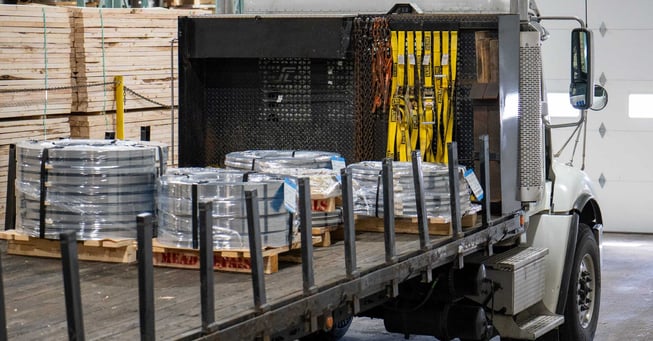
Quality inspection and quality assurance are not the same thing. The difference matters most when you’re placing orders that have to hold tight tolerance — the jobs where your supplier list narrows to a handful because most can’t deliver the consistency you need. Inspection is a checkpoint at the end: Did this part meet spec before it shipped? Assurance is a system built into every stage: Are we certain this material will meet spec before we ever start processing?
A service center that only inspects at the end is catching problems after they’ve already been created. If incoming material is out of tolerance or the wrong temper, end-of-line inspection tells you the order is wrong. Quality assurance catches that at receiving, before the material ever reaches the floor. That gap is where most quality failures are born.
True quality assurance in a metal service center looks like this: incoming material gets verified against the mill test report — not just logged and shelved. Before a work order is generated, someone reviews the spec for completeness, including any relevant ASTM standards that govern the material. Processing parameters are confirmed before the run starts — for tolerance-critical work like precision slitting where tolerances run to ±0.005”, those parameters aren’t adjustable mid-run. Each step is documented not because someone might ask, but because traceability is how you prove the chain of custody when a question comes up later. That documentation discipline is what separates a quality system from a quality claim.
A metal service center with a real quality process can answer five specific questions on the spot — about certifications, MTR verification, mill sourcing, tolerances, and traceability. If they hesitate on any of them, that’s your answer. Before you commit to a new supplier, use these as your filter. For a broader evaluation framework, see our guide on how to qualify a metal supplier.
ISO 9001 certification means a supplier’s quality management system has been audited against an international standard — if you want a plain-language breakdown of what ISO certification actually requires, that’s worth a read before you evaluate suppliers. It’s also worth understanding the difference between ISO 9000 and ISO 9001, since suppliers sometimes reference both. Tenure matters more than the credential alone. A supplier who has held ISO 9001 certification since 1998 has built quality processes that have been audited and re-audited for over 25 years. That’s institutional depth, not a credential they acquired for a sales sheet.
AS9100 is the aerospace-specific extension of ISO 9001. If your application is in aerospace, medical, or defense, this certification is often a hard requirement before a purchase order can be placed. A supplier who holds both has been audited to the standards your aerospace or defense customer will ask about before they approve a vendor.
A mill test report documents the chemical and mechanical properties of a specific heat lot of material. Some service centers pass MTRs through from the mill without verification. A quality-focused operation verifies the MTR against the incoming material — confirming the heat lot matches, the cert is complete, and the properties meet the order spec — before that material moves to processing. Ask which approach they take.
Mill source directly affects material consistency. Domestic mills are generally held to tighter tolerances and more consistent quality standards than overseas alternatives. A supplier who can tell you exactly where their heat lots come from — and who has established relationships with specific domestic mills — is giving you something most buyers never think to ask for: consistency you can trace.
Traceability means being able to follow the material from mill to your dock: heat lot number, MTR, processing records, and any inspection documentation. If a quality question comes up after delivery — from your customer, from an auditor, or during a compliance review — your supplier’s ability to produce that chain of custody quickly is the difference between a fast resolution and a prolonged investigation.
When quality is documented and tracked at every stage — not just checked at the end — problems surface earlier and their consequences stay contained. A spec discrepancy caught at incoming inspection is a conversation. The same discrepancy discovered at your customer’s facility is a return, a production delay, and an explanation you shouldn’t have to give.
This is what quality accountability looks like in practice: The supplier catches the issue, communicates it to you before it ships, and presents you with options — not a surprise. That only happens when the system is real. It’s only possible when a quality process is actually running, not just documented on a wall.
This is personal. A quality failure at a supplier level becomes your quality failure at a customer level. You’re the one making the call. The supplier who has the system to catch it first — and the transparency to communicate it fast — is the one who earns a permanent place on your approved vendor list.
A quality part doesn’t happen at final inspection. It happens at intake, at sourcing, at every checkpoint in between. The metal service centers that understand this build quality into their process rather than bolting it on at the end. ISO certification, AS9100, MTR verification, domestic sourcing, full traceability — these aren’t credentials to display. They’re the operational proof that a supplier takes quality seriously before the order ships.
In a reactive industry, a supplier with a documented quality system isn’t just protecting their process — they’re protecting yours. That’s the difference between a vendor and a partner you can confidently put on your approved list. See how it fits into everything that makes up The Mead Edge, or browse our full library of guides and technical resources.